A) There is no radioactive isotope of nitrogen.
B) Radioactive nitrogen has a half-life of 100,000 years, and the material would be too dangerous for too long.
C) Avery et al. have already concluded that this experiment showed inconclusive results.
D) Although there are more nitrogens in a nucleotide, labeled phosphates actually have 16 extra neutrons; therefore, they are more radioactive.
E) Amino acids (and thus proteins) also have nitrogen atoms; thus, the radioactivity would not distinguish between DNA and proteins.
G) B) and E)
Correct Answer

verified
Correct Answer
verified
A) DNA polymerase
B) DNA ligase
C) nucleotides
D) Okazaki fragments
E) primase
G) B) and E)
Correct Answer
verified
Correct Answer
verified
A) DNA contains sulfur, whereas protein does not.
B) DNA contains phosphorus, whereas protein does not.
C) DNA contains nitrogen, whereas protein does not.
D) DNA contains purines, whereas protein includes pyrimidines.
E) RNA includes ribose, whereas DNA includes deoxyribose sugars.
G) A) and B)
Correct Answer
verified
Correct Answer
verified
A) Frederick Griffith
B) Alfred Hershey and Martha Chase
C) Oswald Avery, Maclyn McCarty, and Colin MacLeod
D) Erwin Chargaff
E) Matthew Meselson and Franklin Stahl
G) B) and D)
Correct Answer
verified
Correct Answer
verified
A) double-stranded DNA, four kinds of dNTPs, primers, origins of replication
B) topoisomerases, telomerases, polymerases
C) G-C rich regions, polymerases, chromosome nicks
D) nucleosome loosening, four dNTPs, four rNTPs
E) ligase, primers, nucleases
G) B) and E)
Correct Answer
verified
Correct Answer
verified
A) The twisting nature of DNA creates nonparallel strands.
B) The 5' to 3' direction of one strand runs counter to the 5' to 3' direction of the other strand.
C) Base pairings create unequal spacing between the two DNA strands.
D) One strand is positively charged and the other is negatively charged.
E) One strand contains only purines and the other contains only pyrimidines.
G) None of the above
Correct Answer
verified
Correct Answer
verified
A) primase, polymerase, ligase
B) 3' RNA nucleotides, DNA nucleotides 5'
C) 5' RNA nucleotides, DNA nucleotides 3'
D) DNA polymerase I, DNA polymerase III
E) 5' DNA to 3'
G) B) and C)
Correct Answer
verified
Correct Answer
verified
A) A
B) B
C) C
D) D
E) E
G) A) and C)
Correct Answer
verified
Correct Answer
verified
A) I
B) II
C) III
D) IV
E) V
G) C) and E)
Correct Answer
verified
Correct Answer
verified
A) polymerase molecules.
B) ribosomes.
C) histones.
D) a thymine dimer.
E) satellite DNA.
G) None of the above
Correct Answer
verified
Correct Answer
verified
A) the nutrient broth only
B) the nutrient broth and the tetracycline broth
C) the nutrient broth and the ampicillin broth
D) the tetracycline broth and the ampicillin broth
E) all three broths
G) C) and D)
Correct Answer
verified
Correct Answer
verified
A) the leading strand is synthesized in the same direction as the movement of the replication fork, and the lagging strand is synthesized in the opposite direction.
B) the leading strand is synthesized by adding nucleotides to the 3' end of the growing strand, and the lagging strand is synthesized by adding nucleotides to the 5' end.
C) the lagging strand is synthesized continuously, whereas the leading strand is synthesized in short fragments that are ultimately stitched together.
D) the leading strand is synthesized at twice the rate of the lagging strand.
F) None of the above
Correct Answer
verified
Correct Answer
verified
A) I
B) II
C) III
D) IV
E) V
G) C) and E)
Correct Answer
verified
Correct Answer
verified
A) Replication is semi-conservative.
B) Replication is not dispersive.
C) Replication is not semi-conservative.
D) Replication is not conservative.
E) Replication is neither dispersive nor conservative.
G) A) and D)
Correct Answer
verified
Correct Answer
verified
A) 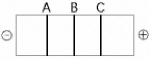
B) 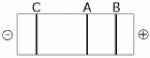
C) 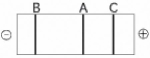
D) 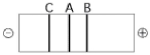
E) 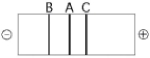
G) A) and B)
Correct Answer
verified
Correct Answer
verified
A) A = G
B) A + G = C + T
C) A + T = G + T
D) A = C
E) G = T
G) A) and C)
Correct Answer
verified
Correct Answer
verified
A) altering the nucleotide sequence of the DNA fragment without adding or removing nucleotides
B) acetylating the cytosine bases within the DNA fragment
C) increasing the length of the DNA fragment
D) decreasing the length of the DNA fragment
E) neutralizing the negative charges within the DNA fragment
G) A) and C)
Correct Answer
verified
Correct Answer
verified
A) mending of double-strand breaks in the DNA backbone.
B) breakage of cross-strand covalent bonds.
C) the ability to excise single-strand damage and replace it.
D) the removal of double-strand damaged areas.
E) causing affected skin cells to undergo apoptosis.
G) D) and E)
Correct Answer
verified
Correct Answer
verified
A) one high-density and one low-density band
B) one intermediate-density band
C) one high-density and one intermediate-density band
D) one low-density and one intermediate-density band
E) one low-density band
G) All of the above
Correct Answer
verified
Correct Answer
verified
A) They cannot replicate DNA.
B) They cannot undergo mitosis.
C) They cannot exchange DNA with other cells.
D) They cannot repair thymine dimers.
E) They do not recombine homologous chromosomes during meiosis.
G) A) and E)
Correct Answer
verified
Correct Answer
verified
Showing 41 - 60 of 68
Related Exams